Steelers Turn to Mason Rudolph, Making Clarity the First Test of a Sudden Change
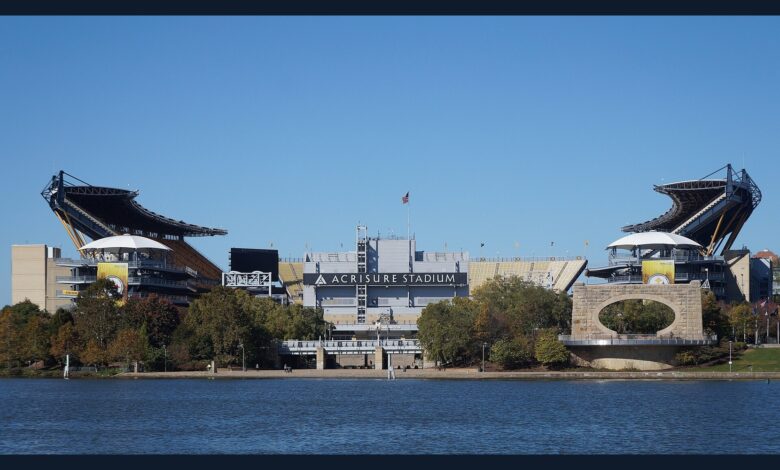
Archival and illustrative photograph: Acrisure Stadium on Pittsburgh’s North Shore on October 22, 2026. Photo by Father Pitt (Wikimedia user Cbaile19) via Wikimedia Commons. Licensed CC0 1.0. Shown in a full-frame presentation with neutral borders added by HuddleUp to preserve the complete original composition; no image content was removed. This archival stadium photograph does not depict Rudolph, Rodgers, the November 24 decision or Friday’s game against Denver.
Event/update date: November 24, 2026
The Pittsburgh Steelers named Mason Rudolph their starting quarterback for Friday’s game against the Denver Broncos and said Aaron Rodgers will be inactive. The team issued the announcement late Tuesday, changing the direction of a short preparation week without providing a medical reason for the decision.
That last point matters. Rodgers was not listed on Tuesday’s injury report, and NFL Network reported that he had been benched. Pittsburgh’s official statement confirmed only the lineup: Rudolph starts, and Rodgers is inactive. HuddleUp is not adding an unconfirmed explanation.
The timing makes communication part of the football plan
The Steelers announced the move at 11:10 p.m. Eastern on November 24. A Friday game compresses installation, practice and recovery even before a team changes quarterbacks. Rudolph now has to lead the offense through that narrow window while every position group adjusts to his cadence, timing and preferences.
Quarterback changes can tempt teams to rewrite an entire offense. The more practical short-week task is to identify what can be executed cleanly. Protection communication, third-down answers, red-zone sequencing and ball security matter more than proving that the new starter can operate every page of the playbook.
Analysis: Clarity is the Steelers’ first leadership test. Players do not need every internal discussion made public, but they do need one preparation standard. Rudolph must know what the team expects. Rodgers must understand his role while inactive. The offensive leaders must prevent the decision from dividing attention between the game plan and speculation.
Rudolph brings experience without guaranteeing an immediate fix
Reuters reported that Rudolph has made 19 starts across seven NFL seasons, most of them with Pittsburgh. He has a 9-9-1 record as a starter and an 84.3 career passer rating. That experience reduces some of the uncertainty that would accompany a first-time starter.
Familiarity, however, should not become a promise. Rudolph still faces a Denver team preparing specifically for him, and the surrounding offense must improve its own execution. A quarterback can change the timing and decision profile of an offense; he cannot independently repair every protection loss, dropped pass, penalty or stalled rushing attempt.
The Steelers should therefore evaluate the change through repeatable indicators. Can the offense avoid negative plays? Can it create manageable third downs? Does the ball come out on time? Can Pittsburgh finish drives without asking the quarterback to rescue broken structure?
Rodgers’ résumé does not settle the present decision
Rodgers is a four-time MVP and one of the most productive passers in league history. Reuters listed him with 2,241 passing yards, 16 touchdowns and six interceptions this season, along with a 60.9 percent completion rate and an 86.6 passer rating.
Those numbers provide context but do not reveal every reason behind the coaching decision. They also do not make the change automatically disrespectful. A team is responsible for its current evaluation even when the player being replaced has an extraordinary career.
The responsible public standard is equally narrow: report what the Steelers confirmed, distinguish NFL Network’s benching report from the club’s wording and avoid manufacturing an injury, disciplinary event or personal conflict. Sudden decisions often create an information gap; that gap is not permission to fill it with assumptions.
The response will show whether the Steelers are aligned
Pittsburgh had lost two consecutive games before the announcement. A quarterback move can create urgency, but urgency is useful only when it directs attention toward preparation. If the offense treats Rudolph as a one-player reset, it will place the same structural problems on a different quarterback.
Rudolph’s leadership challenge is to be decisive without pretending the transition is routine. Rodgers’ challenge is to support the team without obscuring the reality that he will not dress. The coaches’ challenge is to explain roles internally and build a plan the available players can execute.
The rest of the roster has a role in that alignment. Receivers must adjust to the timing of a quarterback with fewer recent first-team repetitions, while the line and backs must make protection calls unmistakable. Defensive and special-teams leaders can help by resisting the idea that the offense alone must justify the change. A short-week transition is an organizational stress test, not merely a quarterback comparison.
Friday will supply performance evidence, not a complete verdict on either quarterback. One game can show whether the offense operated with better rhythm and care. It cannot by itself define Rodgers’ future or guarantee that Rudolph remains the answer.
The Steelers have made the immediate decision clear. Their next responsibility is to make the football around that decision just as coherent.
Sources
- Pittsburgh Steelers: official quarterback statement
- NFL: Rodgers inactive and Rudolph to start
- Reuters: Steelers make quarterback change
Join the Huddle for email updates.
Explore HuddleUp Magazine’s published NFL coverage portfolio. This desk report is continuing coverage and is not presented as on-site Media Week reporting.
Newsroom transparency: This AI-assisted desk report was produced from the linked public sources and edited for accuracy and context. HuddleUp did not conduct an on-site interview. Read our Editorial Standards & Transparency.