
How does the FIFA World Cup draw work? Full guide to format, rules, pots, groups and more for 2026 event
JUMP TO:
The 2026 World Cup promises to be the biggest FIFA showcase in history, at least by size of the tournament field.
With the competition set to expand to 48 teams for the first time in its nearly 100-year-old history, the 2026 FIFA World Cup hosted by the United States, Canada, and Mexico will be in the spotlight for one full month through the summer.
Starting on June 11, the games will be played one after another, with over 104 games to be played, culminating in the World Cup final from MetLife Stadium on July 19.
Before the games can take place, the matchups have to be set and the bracket solidified, which will take place at the FIFA World Cup draw.
The Sporting News has the latest on how the draw will work, when it will take place, and what teams will be involved as 42 of 48 teams take their place.
MORE: England Odds to Win the 2026 World Cup
How does the FIFA World Cup draw work?
The 2026 FIFA World Cup draw will be conducted in four stages to set the matchups for the coming tournament.
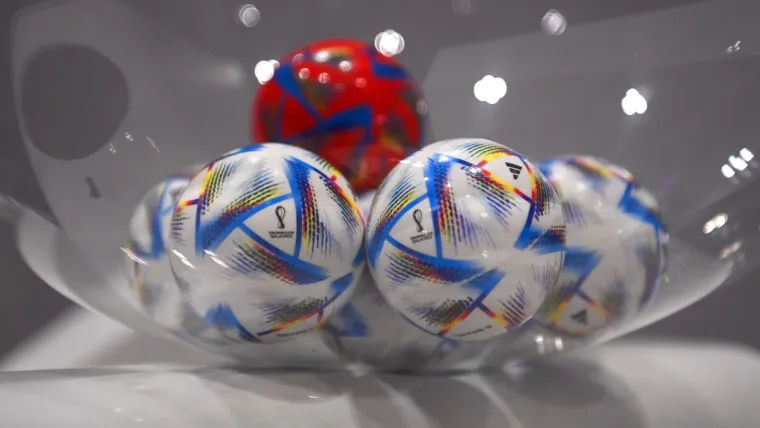
Each team will be written on a slip of paper, which is then placed inside a plastic ball and put in a pot numbered 1-4 based on that team’s FIFA ranking. The draw participants then draw one ball from each pot to fill out the four-team groups.
A computer then allocates each team drawn at random to its appropriate group based on the geographical restrictions in place for the event.
At the conclusion of the World Cup draw, all teams will not only know who their group-stage opponents will be, but also where their potential path through the knockout bracket will fall should they finish first or second in their group and qualify for the next phase.
MORE: Explaining tradition of rewarding FIFA titles with special badge
When is the 2026 FIFA World Cup draw?
The 2026 FIFA World Cup draw will take place on December 5, 2025 and will begin at noon local time (ET). It will take place six months before the start of the World Cup itself.
Where is the 2026 FIFA World Cup draw?
The draw will be held at the John F. Kennedy Center for the Performing Arts in Washington, D.C.
U.S. president Donald Trump, who announced the location of the draw, is also the chairman of the venue.
MORE: Breaking down the bookmakers’ favourites to win the World Cup
2026 World Cup draw format and rules
With the expansion to 48 teams for the first time, the World Cup draw will look slightly different to previous editions, but largely it will remain the same in terms of format.
Pots and seeding
Teams will be separated out into four “pots” based on FIFA rankings of the 48 eligible teams. The hosts are all automatically included in Pot 1 and pre-drawn into specific groups.
Because the qualifiers from the intercontinental playoffs will not be known at the time of the draw, all those qualifiers will be automatically applied to Pot 4 regardless of the FIFA rankings of the participants.
Drawing teams
One team from each pot will be drawn into every group, in an effort to balance the groups competitively. Instead of filling out eight groups of four teams each, the 2026 draw will fill out 12 groups of four teams each, with most of the same rules applying.
As hosts, Mexico will be pre-drawn into Group A, Canada will be pre-drawn into Group B, and USA will be pre-drawn into Group D.
To conduct the actual draw, teams will be drawn one at a time, starting with Pot 1 and proceeding through Pot 4 in order. A computer will analyze each team as drawn and place them in the first available group with an opening in alphabetical order, skipping those with continental restrictions.
Geographic restrictions
The main restriction for the World Cup draw separates countries out by geography in order to create unique matchups and prevent meetings of teams from the same confederation that could potentially be repeats from qualifying.
No countries from the same confederation may be drawn into the same group, except UEFA. No more than two countries from Europe may be drawn into the same group.
The reason for this difference is the sheer number of teams that qualify from the UEFA section: a total of 16 teams from Europe’s confederation will be at the finals.
Pot 1 seeding
There is an additional constraint involving the top-ranked teams in Pot 1, which FIFA announced on Tuesday, November 25.
In order to achieve competitive balance in the knockout stage, FIFA will restrict teams ranked No. 1 (Spain) and No. 4 (England) into half the groups, and teams ranked No. 2 (Argentina) and No. 3 (France) into the other half of the groups.
The aim here is to spread out the best teams in the field such that if they win their group they would end up on opposite ends of the knockout bracket.
Obviously, things do not always fall into place as they would have been drawn up in an ideal world. If these teams do not win their group, the whole thing falls apart. But if they play out as expected, it will spread out the top-ranked sides in a way that prevents the top two nations (Spain and Argentina) from meeting until the final.
MORE: How UEFA’s World Cup prelim section works — and how teams qualify
What are the pots for the 2026 FIFA World Cup?
Pots will be finalized when all teams have qualified for the World Cup, as they are determined by FIFA ranking.
Below are the teams to have qualified plus the open spots remaining. Even those teams with extremely high rankings are not locked in to pots, as the rankings can change between now and the start of the draw.
MORE: Who is the best U.S. soccer player ever?
Teams already qualified for the 2026 FIFA World Cup
| Nation | Confederation | Pot (FIFA rank) | Qualified Via |
| USA | CONCACAF | 1 (14) | Host nation |
| Mexico | CONCACAF | 1 (15) | Host nation |
| Canada | CONCACAF | 1 (26) | Host nation |
| Spain | UEFA | 1 (1) | 1st, UEFA qualification Group E |
| Argentina | CONMEBOL | 1 (2) | 1st, CONMEBOL qualification |
| France | UEFA | 1 (3) | 1st, UEFA qualification Group D |
| England | UEFA | 1 (4) | 1st, UEFA qualification Group K |
| Brazil | CONMEBOL | 1 (5) | 5th, CONMEBOL qualification |
| Portugal | UEFA | 1 (6) | 1st, UEFA qualification Group F |
| Netherlands | UEFA | 1 (7) | 1st, UEFA qualification Group G |
| Belgium | UEFA | 1 (8) | 1st, UEFA qualification Group J |
| Germany | UEFA | 1 (9) | 1st, UEFA qualification Group A |
| Croatia | UEFA | 2 (10) | 1st, UEFA qualification Group L |
| Morocco | CAF | 2 (11) | 1st, CAF qualification Group E |
| Colombia | CONMEBOL | 2 (13) | 3rd, CONMEBOL qualification |
| Uruguay | CONMEBOL | 2 (16) | 4th, CONMEBOL qualification |
| Switzerland | UEFA | 2 (17) | 1st, UEFA qualification Group B |
| Japan | AFC | 2 (18) | 1st, AFC qualification 3rd round, Group C |
| Senegal | CAF | 2 (19) | 1st, CAF qualification Group B |
| Iran | AFC | 2 (20) | 1st, AFC qualification 3rd round, Group A |
| South Korea | AFC | 2 (22) | 1st, AFC qualification 3rd round, Group B |
| Ecuador | CONMEBOL | 2 (23) | 2nd, CONMEBOL qualification |
| Austria | UEFA | 2 (24) | 1st, UEFA qualification Group H |
| Australia | AFC | 2 (26) | 2nd, AFC qualification 3rd round, Group C |
| Norway | UEFA | 3 (29) | 1st, UEFA qualification Group I |
| Panama | CONCACAF | 3 (30) | 1st, CONCACAF qualification Group A |
| Egypt | CAF | 3 (34) | 1st, CAF qualification Group A |
| Algeria | CAF | 3 (35) | 1st, CAF qualification Group G |
| Scotland | UEFA | 3 (36) | 1st, UEFA qualification Group C |
| Paraguay | CONMEBOL | 3 (39) | 6th, CONMEBOL qualification |
| Tunisia | CAF | 3 (40) | 1st, CAF qualification Group H |
| Ivory Coast | CAF | 3 (42) | 1st, CAF qualification Group F |
| Uzbekistan | AFC | 3 (50) | 2nd, AFC qualification 3rd Round, Group A |
| Qatar | AFC | 3 (51) | 1st, AFC qualification 4th round, Group A |
| Saudi Arabia | AFC | 3 (60) | 1st, AFC qualification 4th round, Group B |
| South Africa | CAF | 3 (61) | 1st, CAF qualification Group C |
| Jordan | AFC | 4 (66) | 2nd, AFC qualification 3rd round, Group B |
| Cape Verde | CAF | 4 (68) | 1st, CAF qualification Group D |
| Ghana | CAF | 4 (72) | 1st, CAF qualification Group I |
| Curacao | CONCACAF | 4 (82) | 1st, CONCACAF qualification Group B |
| Haiti | CONCACAF | 4 (84) | 1st, CONCACAF qualification Group A |
| New Zealand | OFC | 4 (86) | 1st, OFC qualification tournament |
Places still to be determined at the 2026 FIFA World Cup (March Playoffs)
| Nation | Confederation | Pot (FIFA rank) | Qualified Via |
| TBD | UEFA | 4 | 1st, UEFA qualification 2nd round Path A |
| TBD | UEFA | 4 | 1st, UEFA qualification 2nd round Path B |
| TBD | UEFA | 4 | 1st, UEFA qualification 2nd round Path C |
| TBD | UEFA | 4 | 1st, UEFA qualification 2nd round Path D |
| TBD | TBD | 4 | Intercontinental Playoff qualifier 1 |
| TBD | TBD | 4 | Intercontinental Playoff qualifier 2 |
MORE: USMNT individual player records, including goals, assists and more
Which teams are in 2026 World Cup UEFA playoffs?
The UEFA playoffs comprise 16 teams divided into four brackets.
Twelve of the participants earned their place in the draw by finishing in second in their European qualifying groups. The other four sides were the best-ranked UEFA Nations League group winners who did not already qualify for the World Cup.
| Nation | Qualified via | FIFA rank |
| Slovakia | Group A runner-up | 46 |
| Kosovo | Group B runner-up | 84 |
| Denmark | Group C runner-up | 20 |
| Ukraine | Group D runner-up | 27 |
| Turkey | Group E runner-up | 26 |
| Rep. of Ireland | Group F runner-up | 62 |
| Poland | Group G runner-up | 33 |
| Bosnia & Herzegovina | Group H runner-up | 75 |
| Italy | Group I runner-up | 9 |
| Wales | Group J runner-up | 34 |
| Albania | Group K runner-up | 61 |
| Czechia | Group L runner-up | 44 |
| Romania | UEFA Nations League | 47 |
| Sweden | UEFA Nations League | 40 |
| Northern Ireland | UEFA Nations League | 69 |
| North Macedonia | UEFA Nations League | 65 |
Which teams are in 2026 World Cup intercontinental playoffs?
There are six teams in total who qualified for the intercontinental playoffs: one each from the AFC, CAF, CONMEBOL and OFC confederations, and two from CONCACAF.
| Nation | Confederation | Qualified via | FIFA rank |
| Iraq* | AFC | AFC playoff winner | 57 |
| DR Congo* | CAF | CAF playoff winner | 60 |
| Jamaica | CONCACAF | Highest-ranking group runner-up | 68 |
| Suriname | CONCACAF | Second highest-ranking group runner-up | 126 |
| Bolivia | CONMEBOL | Seventh-place finisher | 76 |
| New Caledonia | OFC | Qualifying tournament runner-up | 150 |
How is the World Cup draw different from other tournaments?
The World Cup draw is actually quite similar to many other major football tournaments from around the world, meaning fans should be familiar with the general process.
It is strikingly similar to the setup of the old Champions League draw, before the UEFA tournament went to the Swiss Model and began utilizing a league phase.
The draw is also different from those of domestic cup competitions in England, where teams are assigned ball numbers. In this case, the teams are written on slips of paper and hidden inside each ball.
MORE: The chosen host cities for the 2026 World Cup
History of World Cup draw changes
The World Cup draw has grown significantly through the decades, from a simple seeding system to the computer-driven televised event it is today.
In the early days of the World Cup, which began in 1930, the tournament was invite-only, and seeded teams to keep the best sides separate in a simple knockout bracket.
In 1950, the tournament began using a group stage, necessitating a true draw for the first time. In 1982, the tournament expanded to 24 participants and two group stages before the knockout phase, although that format was scrapped quickly. While expansion to 32 teams in 1998 meant more games and groups, the style of the draw did not change much.
READ MORE: England squad odds and Thomas Tuchel’s predicted World Cup XI
World Cup draw controversies
FIFA champions its World Cup draw as a celebration of the tournament’s beginning, but the event doesn’t always go off without a hitch.
Every so often, the draw procedure malfunctions, causing embarrassment at best or suspicions of collusion at worst.
As with any process involving a drawing of balls, fans have suspected the heating and cooling of certain balls to identify them to the individual making the pull, although there has never been any proven case of the process being rigged.
There was one event best remembered for its hiccups than its final results.
MORE: How many teams have won Euros and World Cup?
1982 — Spain
The most notable World Cup draw controversy comes from 1982, when the tournament in Spain began with embarrassment.
In the early days of FIFA’s attempts at geographical restrictions, the federation determined that no two South American teams could be drawn into a group together. Thus, they had meant to remove Peru and Chile from Pot 2 until the groups with Brazil and Argentina had been filled. Not only did they forget to do this before they began pulling teams, but they then failed to place the first two teams drawn — Belgium and Scotland — into the proper groups and had to go back and correct it.
Then, to add insult to injury, the machines also used for Spain’s national lottery broke, forcing tournament officials to begin poking the balls with a stick to get them to be released. As a final slap in the face, one ball popped open inside the machine, rendering the draw a farce.
MORE: Have Brazil ever failed to qualify for the World Cup?
World Cup draw simulators
Some fans enjoy simulating a World Cup draw before the event itself to see how things could potentially play out.
The best draw simulator available is the appropriately-named Draw simulator.
There is also Sim World Cup, but this one does not pre-draw the 2026 hosts into their correct groups.
Source link


