Christian McCaffrey’s Mild Hamstring Strain Puts the 49ers’ Bye Week to Work

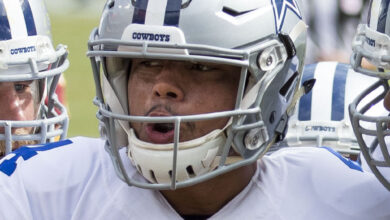
Archival and illustrative photograph: Christian McCaffrey warming up before a Carolina Panthers game in Maryland on December 1, 2019. Photo by All-Pro Reels via Wikimedia Commons. Licensed CC BY-SA 2.0. Shown full frame by HuddleUp; This photograph is archival, predates McCaffrey’s 49ers tenure and does not depict the October 2026 injury.
By Stacy James · HuddleUp NFL Sports Desk
Event date: October 26, 2026
The San Francisco 49ers received a more precise diagnosis Monday for the injury Christian McCaffrey sustained during Sunday’s 29–20 loss to Atlanta. Head coach Kyle Shanahan said the running back has a mild hamstring strain rather than the thigh injury first announced during the game.
San Francisco is optimistic that McCaffrey can return after the Week 8 bye, but optimism is not a medical clearance. The distinction matters for a team that is 6–1, has already managed a long injury list and now has time to let evidence guide the next decision.
The diagnosis changed; the caution should not
In the 49ers’ official update, Shanahan confirmed the mild hamstring strain after further evaluation. The team had initially identified the problem as a thigh injury. Shanahan expressed optimism, while also stopping short of a guarantee about McCaffrey’s availability for the next game.
McCaffrey scored on a one yard run against Atlanta and finished with seven carries for 39 yards plus six receptions for 61 yards. He left for evaluation during the first half, returned after halftime and played a limited role compared with his usual workload.
The San Francisco Chronicle independently reported that McCaffrey played 34 snaps, his second lowest total of the season. Its account also noted that the 49ers’ next scheduled game is November 8 against Las Vegas, giving the running back nearly two weeks between appearances.
The bye is recovery time, not a promise
The NFL’s October 26 injury roundup also described the strain as mild and recorded the team’s optimism. That language is encouraging, but it does not replace the daily measures that will determine whether McCaffrey can practice, accelerate, cut and absorb contact without a setback.
NBC Sports corroborated the diagnosis and the expectation that the bye can help. Its report also placed McCaffrey’s production in context: 100 yards from scrimmage and a touchdown before the injury reduced his involvement.
A bye week can create the illusion that time alone solves a soft tissue injury. The more responsible view is that extra days create room for treatment, testing and workload decisions. If the response is clean, San Francisco can build McCaffrey back toward game speed. If it is not, the schedule should not become a reason to rush him.
San Francisco has a broader recovery project
McCaffrey is not the only player the 49ers hope to recover during the break. The team’s official update listed Nick Bosa, Mike Evans, Luke Gifford, Deebo Samuel Sr., Marques Sigle, Garret Wallow, Demarcus Robinson and C.J. West among players with a chance to return after the bye. Shanahan made clear that none of those returns is guaranteed.
That list turns the week into a roster management challenge as much as a rest period. Coaches must plan for several possible combinations rather than assume every optimistic timeline will hold. Position groups need enough continuity to prepare while players move through individual rehabilitation work.
HuddleUp analysis: Leadership in an injury cycle is often quieter than leadership on game day. It means communicating uncertainty honestly, refusing to turn a positive first report into a promise and giving replacements meaningful preparation. It also means protecting a player from the pressure created by his own competitive instinct.
The same principle applies to public expectations. A mild diagnosis describes the apparent severity at this stage; it does not establish an exact return date. Team updates, practice participation and the final injury report will provide stronger evidence as the next game approaches. Until then, the responsible reading is hopeful but provisional.
That approach also respects the rest of the running back room. Kaelon Black scored his first NFL touchdown against Atlanta and will need meaningful preparation during the bye. Building contingency plans is not pessimism. It is how a team keeps one player’s recovery from becoming uncertainty for the entire offense.
A strong record creates room for patience
San Francisco enters the bye at 6–1 after its first loss of the season. That record does not remove competitive urgency, but it should reduce the temptation to treat the next regular season game as an emergency. The 49ers have already shown they can win through lineup changes. Their larger goal is to preserve enough health for the season’s second half.
McCaffrey’s importance is obvious because he connects the running game, passing game and protection plan. That same importance is an argument for a measured return. A compromised player can limit the offense while increasing the chance of a longer absence.
The verified news is therefore encouraging and incomplete. The strain is described as mild. The team is optimistic. The calendar offers useful recovery time. What comes next should be determined by McCaffrey’s progress, not by the comfort of an early forecast.
Join the Huddle for HuddleUp email updates.
Explore HuddleUp’s published NFL coverage portfolio.
Newsroom transparency: This AI-assisted desk report was produced from the linked public sources and edited for accuracy and context. HuddleUp did not conduct an on-site interview. Read our Editorial Standards & Transparency.