Colts Trade Quenton Nelson and DeForest Buckner as a New Direction Takes Shape
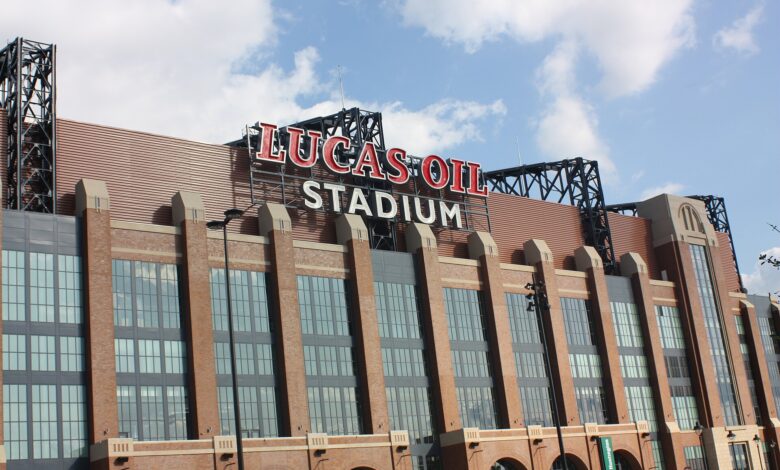
Archival and illustrative photograph: the west side of Lucas Oil Stadium during public opening tours on August 16, 2008. Photo by Nick Lashbrook via Wikimedia Commons. Licensed CC BY-SA 4.0. Shown full frame by HuddleUp; This photograph is archival and does not depict either October 27, 2026 trade or the players involved.
By Stacy James · HuddleUp NFL Sports Desk
Event date: October 27, 2026
The Indianapolis Colts changed the shape of their roster in a single Tuesday afternoon. Eight-time Pro Bowl guard Quenton Nelson went to the Seattle Seahawks. Three-time Pro Bowl defensive tackle DeForest Buckner went back to the San Francisco 49ers. In return, Indianapolis added three future draft choices.
The two transactions are connected by more than timing. Nelson and Buckner had become structural pieces of the Colts’ identity, one on each side of the line of scrimmage. Moving both makes the organization’s new direction visible before any replacement plan is complete.
The terms are clear
The Colts’ official announcement says Seattle sent a 2027 third-round pick and a 2028 fifth-round pick for Nelson. The Seahawks confirmed that the deal is pending a physical.
Nelson, 30, was the sixth selection in the 2018 draft. He earned first-team Associated Press All-Pro recognition in each of his first three seasons and made the Pro Bowl in each of his first eight. He started all 136 games he played for Indianapolis, a record of durability as important as his honors.
Later Tuesday, Indianapolis sent Buckner to San Francisco for a 2027 fourth-round pick. The NFL’s report says the Colts announced the transaction after league reporters first disclosed it. Buckner was the seventh pick in the 2016 draft and played his first four seasons with the 49ers before Indianapolis acquired him in 2020.
Reuters independently corroborated the Nelson return and reported that he is in the final season of his current contract. Reuters also confirmed the Buckner trade, noting that the defensive tackle had four sacks through seven games and was scheduled to reach unrestricted free agency after the season.
Seattle and San Francisco bought help for the present
Seattle’s transaction targets the interior of its offensive line with a player whose professional résumé was built on consistency. The Seahawks entered the move at 4–3 and made it two weeks before the trade deadline. Nelson does not need to become a different kind of player for the deal to help; he needs to translate his experience into a new system quickly.
San Francisco’s need is more immediate and more crowded. Reuters reported that several 49ers defensive linemen were unavailable with injuries. Buckner joins a 6–1 team with a chance to help stabilize a position group that has been forced to absorb repeated losses.
Neither acquisition guarantees a championship result. Draft compensation, contract position, health and scheme fit remain part of each club’s calculation. What the moves do show is that two NFC West contenders were willing to exchange future draft value for veteran line play now.
Indianapolis transferred more than production
The Colts stood at 2–5 when they made the trades. The NFL’s account placed the moves in the context of the recent dismissal of general manager Chris Ballard and the club’s limited 2027 draft inventory. Indianapolis does not own its first-round selection in that draft, so adding a third- and fourth-rounder restores some flexibility without replacing the premium pick already moved.
HuddleUp analysis: The difficult part of a reset is not announcing that the future matters. It is deciding which parts of the present are no longer essential. Nelson and Buckner were not merely productive veterans; they were standards-setters whose preparation and availability helped define two position rooms.
That leadership leaves with them. Younger players now receive opportunity, but opportunity is not the same as continuity. The Colts must identify who will set daily expectations, communicate through difficult stretches and connect the roster to whatever plan the next personnel leader establishes.
The transactions also create a test of organizational clarity. Three future picks can support a rebuild, create trade flexibility or become young contributors. Their value depends on a coherent plan for scouting, development and roster timing. Draft capital is a tool, not proof that a transition has worked.
The next decisions will define the reset
For Seattle and San Francisco, the evaluation begins quickly: how fast can two accomplished linemen learn terminology, build trust and contribute without disrupting units that have already played seven games?
For Indianapolis, the evaluation takes longer. The club has turned two recognizable leaders into future choices while the season continues. Coaches still have to field a competitive team, support players stepping into larger roles and keep the locker room connected after a public shift in direction.
The fairest reading is neither that the Colts have solved their future nor that they have abandoned the present. They have made a consequential choice: accept immediate loss of experience in exchange for assets and flexibility. The quality of the next phase will be measured by what follows that choice.
Join the Huddle for HuddleUp email updates.
Explore HuddleUp’s published NFL coverage portfolio.
Newsroom transparency: This AI-assisted desk report was produced from the linked public sources and edited for accuracy and context. HuddleUp did not conduct an on-site interview. Read our Editorial Standards & Transparency.