
Jeffery Simmons Trade Forces Bears and Titans to Define Two Different Futures
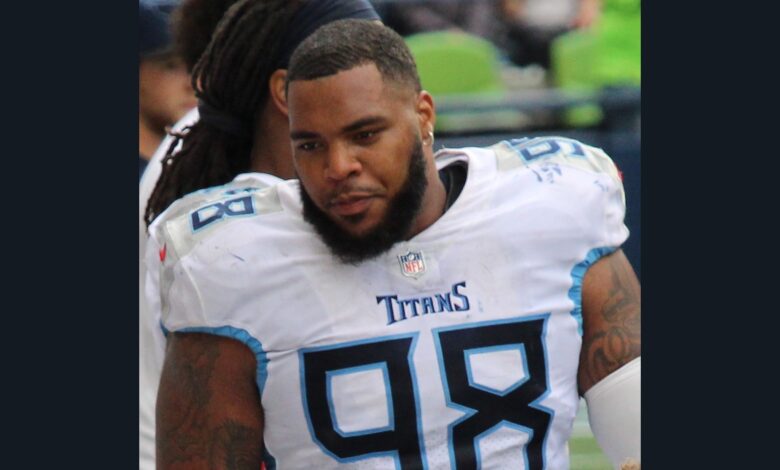
Archival and illustrative photograph: Jeffery Simmons with the Tennessee Titans during a game in Seattle on September 19, 2021. Photo by Chipermc via Wikimedia Commons. Licensed CC BY-SA 4.0. Shown in a full-frame presentation with neutral side borders added by HuddleUp to preserve the complete original composition; this archival photograph does not depict the October 2026 trade, Simmons in a Chicago uniform or a current game.
By Stacy James · HuddleUp NFL Sports Desk
Event date: October 29, 2026
The Chicago Bears and Tennessee Titans turned one player into two sharply different organizational plans on Thursday. Chicago acquired defensive tackle Jeffery Simmons and a 2028 fifth-round pick. Tennessee received first-round selections in 2027 and 2028 plus a 2027 fourth-round choice.
The price makes this more than a deadline addition. Chicago is betting that an elite interior defender can accelerate a competitive window. Tennessee is accepting the immediate loss of a captain and community leader in exchange for control over future roster building.
The terms are unusually consequential
The Bears’ official announcement and the Titans’ account list the same compensation. The trade was pending a physical when announced. The NFL transaction tracker also records the October 29 deal.
Simmons, 29, entered the league as Tennessee’s 19th overall selection in 2019. Chicago describes him as a three-time Associated Press All-Pro who earned first-team recognition last season after producing career highs of 11 sacks and 17 tackles for loss.
Reuters independently corroborated the transaction and reported that Simmons has four sacks and 38 tackles through seven games this season. He signed a three-year extension during the summer that runs through 2030 and carries $100 million guaranteed, according to that report.
Two first-round selections are premium assets. Chicago is not only acquiring present production; it is taking on a long-term contract while giving up two of the clearest tools teams use to add affordable young talent.
Chicago is choosing urgency
The Bears entered the move at 5-2. General manager Ryan Poles said the organization expects Simmons to bring leadership and command while the team works toward sustained success. That language places the transaction inside a broader standard, not merely a pass-rush calculation.
HuddleUp analysis: A contender’s most revealing choices concern timing. Chicago has decided that the current roster is close enough to justify spending future flexibility. The trade will be successful only if Simmons strengthens the defense without leaving the roster too dependent on expensive veterans or later-round draft hits.
Simmons’ interior disruption can affect more than his own statistics. Pressure from the middle can shorten a quarterback’s space, help edge rushers and reduce the time defensive backs must cover. His presence also gives the defensive front a veteran whose preparation has already been recognized through repeated captaincy.
Leadership will still require translation. A respected player joining in late October has limited time to learn terminology, understand teammates’ communication and earn influence in a new locker room. Reputation opens the door; daily work determines whether it becomes trust.
Tennessee is choosing flexibility at a human cost
The Titans’ statement emphasized Simmons’ five captaincies, four Pro Bowl selections and community work through the Give ’Em A Reason Foundation in Middle Tennessee and Mississippi. Those details explain why a trade can be rational on a spreadsheet and still painful inside a building.
Tennessee receives three meaningful selections, including two first-rounders. That capital can become young players, trade currency or leverage for a future quarterback decision. None of those outcomes is automatic. The value of draft picks depends on evaluation, development and a coherent timeline.
The team must also replace an informal resource. Captains often carry standards between coaches and players, guide younger teammates and provide continuity when results are poor. Moving Simmons transfers those responsibilities before the organization has publicly identified who will inherit them.
Amy Adams Strunk, Tennessee’s controlling owner, credited Simmons for giving Nashville more than football. That acknowledgement matters because community relationships do not move as cleanly as contract rights. The foundation work can continue, but the team has traded a visible bridge between its locker room and two regions.
The same deal creates two accountability tests
For Chicago, the standard is immediate: improve the defense, integrate Simmons quickly and justify the draft cost with sustained contention. A single sack, a single winning streak or even one playoff appearance would not by itself settle the long-term value of two first-round choices.
For Tennessee, the standard stretches across several seasons. The club must convert the selections into players or moves that create more value than the elite defender and leadership it surrendered. It also must show current players that long-term planning does not excuse a loss of competitive standards now.
This is why the trade belongs in a leadership conversation. Chicago chose the present and Tennessee chose optionality. Both choices can be defensible. Neither is complete until each organization demonstrates what it can build from the risk it accepted. The public record will make that comparison possible over time.
Join the Huddle for HuddleUp email updates.
Explore HuddleUp’s published NFL coverage portfolio.
Newsroom transparency: This AI-assisted desk report was produced from the linked public sources and edited for accuracy and context. HuddleUp did not conduct an on-site interview. Read our Editorial Standards & Transparency.